
GPT-6 Astra vs Claude Opus 5.5: who writes the better video prompt?
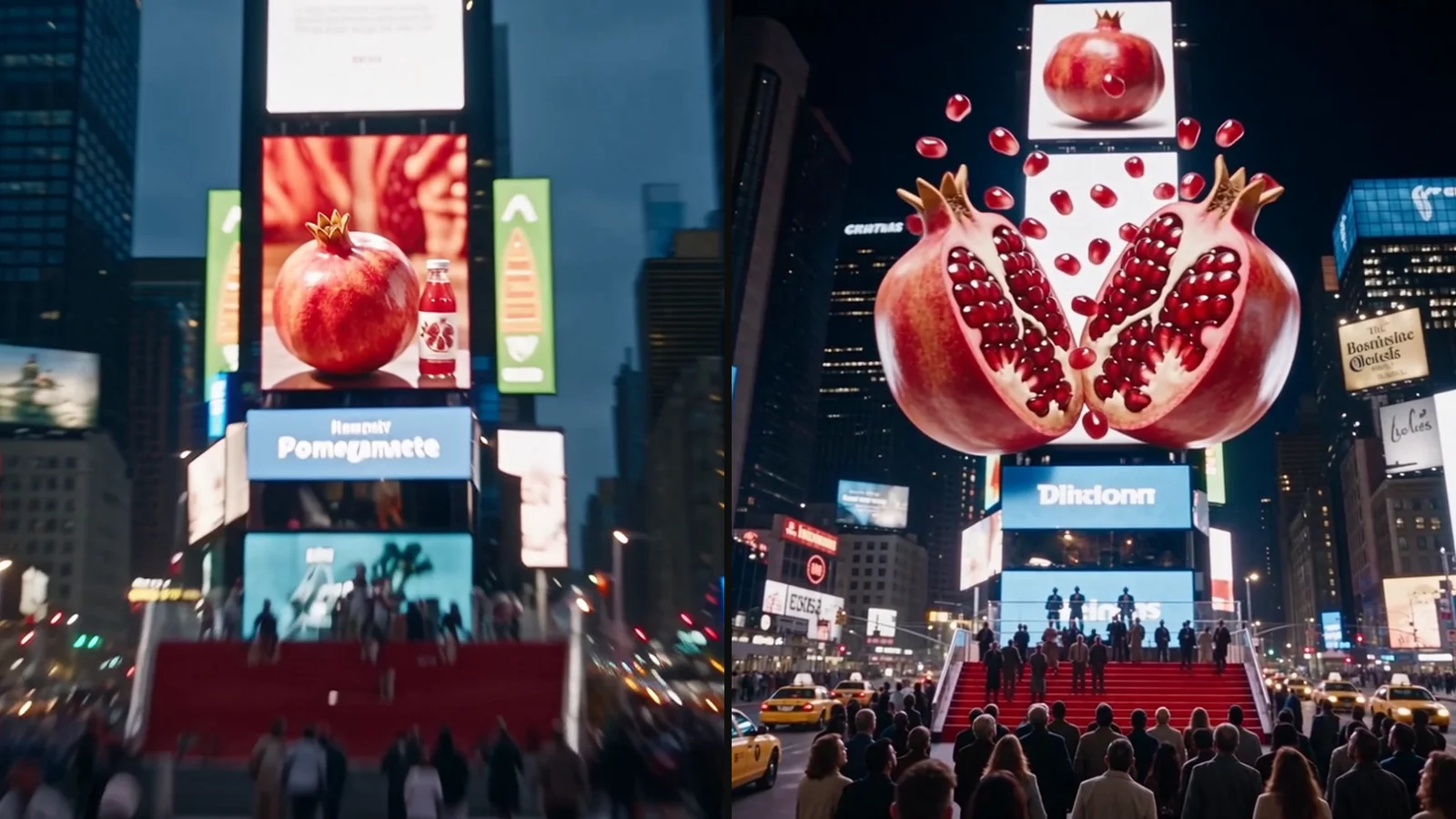
We gave GPT-6 Astra and Claude Opus 5.5 the same brief and the same starting photo, then ran each prompt once on Seedance 2.5 with the same settings: 15 seconds, 720p, sound on. Nothing was edited and nothing was run twice.
The brief both models got
The brief, word for word
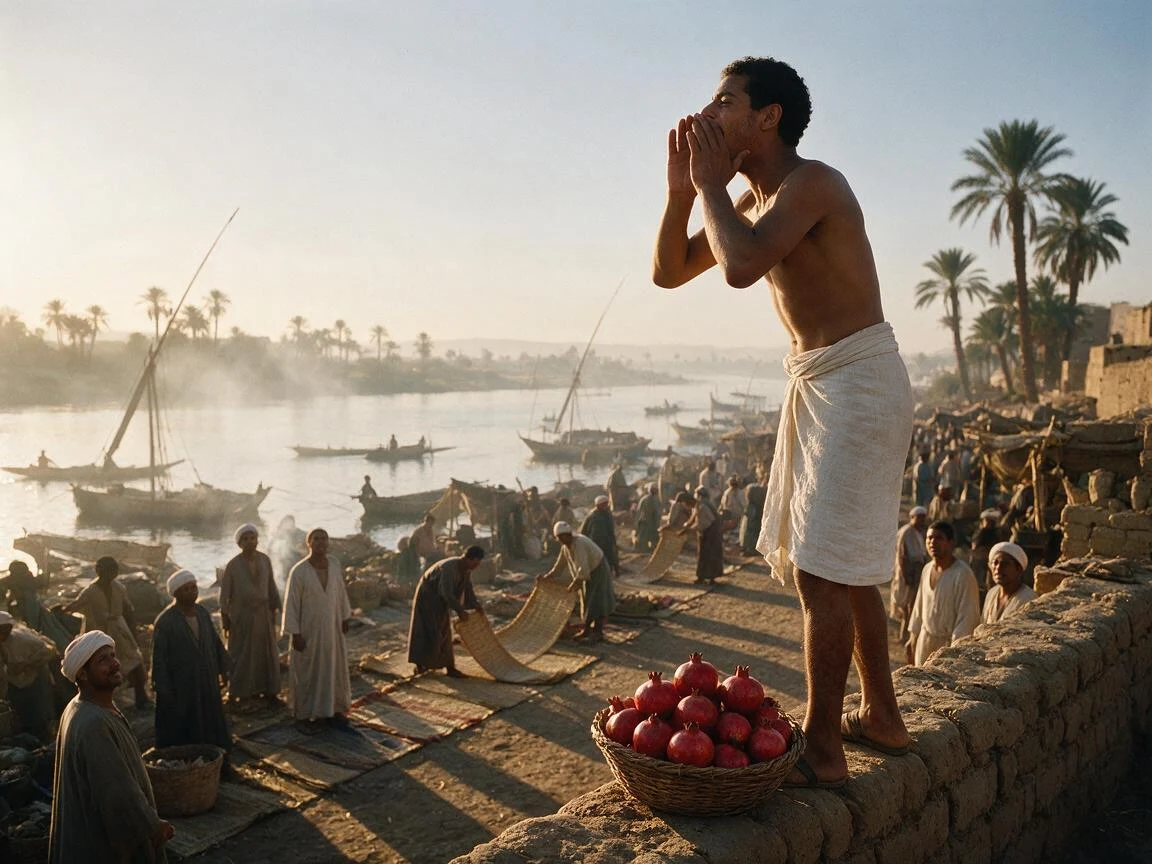
Write the prompt for an AI video model (Seedance 2.5, image to video, 15 seconds, with sound). The starting photo: sunrise at an ancient Egyptian riverside market. A young seller in a white linen kilt stands on a low mud-brick wall, hands cupped around his mouth, shouting to the crowd below, with a basket of red pomegranates at his feet. The idea: 2,000 years of advertising in one continuous shot. The ad keeps transforming through history, from the shouting seller to a hand-painted wall sign, a newspaper ad, a 1950s TV commercial, a Times Square billboard, a phone feed, and finally an ad that builds itself from a single product photo. I want it to stop people scrolling. Reply with the prompt only.
GPT-6 Astra's prompt
Seedance 2.5, 15 seconds, starting photo as the first frameTry this prompt
Create a 15-second cinematic image-to-video with synchronized sound, using the supplied photo as the exact opening frame. Vertical 9:16. **2,000 years of advertising in one continuous, accelerating shot.** Photorealistic, tactile, visually surprising. One red pomegranate remains the visual anchor as advertising evolves around it. Every era physically transforms into the next through seamless camera movement and material morphing. No cuts, dissolves, montage, or split screens.

**0.0–2.0s — The shout.** Animate immediately: the young Egyptian seller leans forward on the low mud-brick wall, hands cupped around his mouth, and shouts, “Pomegranates!” His white linen kilt flutters; people below turn toward him. Sunrise glows through river mist and airborne dust. The camera rushes toward the basket at his feet. One vivid red pomegranate fills the center of frame.

**2.0–3.7s — The wall sign.** Without interrupting the movement, the pomegranate’s glossy skin flattens into red pigment on plaster. The camera eases back to reveal a hand-painted pomegranate advertisement on a weathered market wall. A painter’s brush completes the fruit’s outline, leaving thick, wet paint. The wall’s rough surface begins turning into paper fibers.

**3.7–5.4s — The newspaper.** Painted color contracts into black printing ink. The same fruit is now a bold engraved illustration inside a newspaper advertisement. The newspaper unfurls toward the lens with a crisp snap; its printed halftone dots enlarge and become glowing television phosphors.

**5.4–7.3s — The television.** Pull smoothly out through the curved glass of a 1950s television. Inside its black-and-white commercial, a smiling presenter lifts the same pomegranate beside a bottle of pomegranate juice. A cheerful vintage jingle plays. The camera glides toward the screen as its rounded edges stretch, its picture blooms into color, and scan lines resolve into LED pixels.

**7.3–9.3s — Times Square.** The screen expands into a towering Times Square billboard advertising the same juice bottle and red fruit. Reveal its enormous scale with a fast, fluid backward glide: dazzling lights, moving crowds, reflections on wet pavement. A hand enters the foreground holding a phone precisely aligned with the billboard.

**9.3–11.3s — The feed.** Continue moving toward the phone until its screen dominates the frame. The billboard image seamlessly becomes a sponsored post in a modern phone feed. One thumb swipe makes the polished advertisement peel away, leaving only a simple product photograph: the pomegranate juice bottle against white.

**11.3–15.0s — The ad makes itself.** The single product photo lifts into dimensional space. In one fluid construction, studio lighting sweeps across the bottle, red juice curls around it, pomegranate seeds arc into place, and a rich crimson background unfolds. Typography assembles last: **“ONE PHOTO. THE NEXT ERA.”** The finished premium advertisement fills the entire frame. Hold the clean, striking composition for the final second.

**Sound:** Begin with the seller’s startling, close, human shout over a living riverside market. Transform the rhythm continuously through brush scrape, printing-press clack, vintage TV jingle, city roar, phone swipe, and precise digital assembly sounds. Build a propulsive musical pulse beneath the transitions; land a deep, satisfying impact when the final ad completes. No additional dialogue or narration.

Keep the fruit centered through transitions and the product’s appearance consistent once introduced. Prioritize instantly recognizable eras, legible silhouettes, convincing textures, and fluid motion. Earlier advertisements use simple imagery with minimal incidental lettering; only the final headline needs to be readable. No real brands, watermarks, malformed hands, flickering faces, or abrupt camera jumps.
Claude Opus 5.5's prompt
Seedance 2.5, 15 seconds, starting photo as the first frameTry this prompt
**Seedance 2.5 · Image-to-Video · 15s · Sound On**

One continuous, unbroken camera move with no cuts. The camera starts on the young seller and pushes forward and upward the whole time while the world around him morphs through history. A single red pomegranate stays visible in every era as the anchor. Lighting moves from golden sunrise to modern neon to clean studio white. Photorealistic, cinematic, 35mm, shallow depth of field, rich color, smooth transitions that feel physical.

**0–2s (Ancient Egypt, sunrise):** The seller on the mud-brick wall shouts with his hands cupped. Golden light shines through dust and reed boats drift on the Nile behind him. He reaches down, lifts one glowing pomegranate high, and the crowd turns toward it. SOUND: his voice calling out, market chatter, water lapping, a reed flute.

**2–4s (Painted wall sign):** As the camera pushes past him, the mud-brick wall becomes weathered plaster. A hand-painted pomegranate and bold lettering spread across it while a painter's brush finishes the last stroke. The crowd's clothing shifts through the ages as they walk past. SOUND: the shout echoes and fades, a brush scrapes, footsteps on stone.

**4–6s (Newspaper ad):** The painted sign flattens into ink on paper. A printed newspaper ad with an engraved pomegranate illustration and ornate type sits in sepia tones. A hand snaps the paper open. SOUND: a printing press clanks rhythmically and the paper rustles sharply.

**6–8s (1950s TV commercial):** The camera pulls back to show the newspaper inside a black-and-white 1950s television in a cozy living room. On screen, a smiling host in a suit holds up the pomegranate, with scan lines and a warm tube glow. SOUND: a cheerful jingle with a vintage announcer voice and a soft TV hum.

**8–10.5s (Times Square billboard):** The TV screen expands until it fills the frame and becomes a huge LED billboard in Times Square at night. A glossy pomegranate bursts open in slow motion, its seeds sparkling like rubies over yellow cabs and crowds looking up. SOUND: city roar, car horns, a deep bass synth hit as the fruit splits.

**10.5–12.5s (Phone feed):** The camera pulls back fast and the billboard shrinks into a smartphone screen in a person's hand. A vertical feed scrolls quickly, then the thumb stops on the pomegranate ad. Hearts and likes float up. SOUND: quick swipe flicks, notification pings, then a sudden hush when the thumb stops.

**12.5–15s (Self-building ad):** The phone dissolves away, leaving a single pomegranate product photo floating in clean white space. Light sweeps across it, and the ad builds itself around the photo: the background generates, the typography assembles letter by letter, the layout snaps into place, and the camera swirls 360° around it. In the final frame the finished ad glows with a faint golden shimmer of the original Nile sunrise. SOUND: soft digital chimes rise into one clear modern tone, and an echo of the seller's ancient shout returns layered underneath, then cuts to silence.

**Style:** seamless morph transitions, constant forward momentum, no cuts, no text glitches, consistent pomegranate color (deep crimson), epic yet intimate, scroll-stopping.
What came out
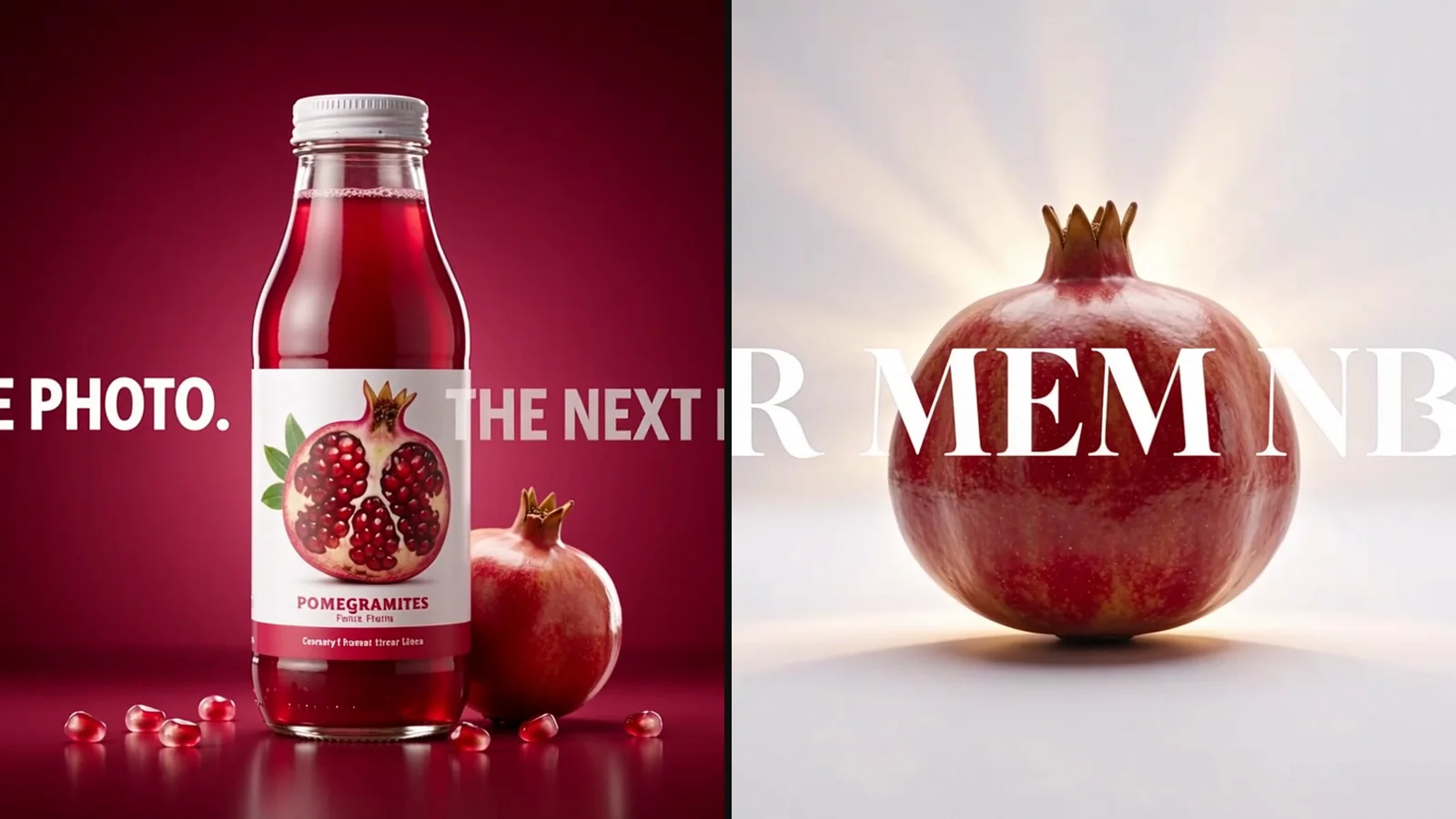
- Both videos got through all seven eras in one shot: the seller, the painted wall, the newspaper, the 1950s TV, Times Square, the phone and the finished ad.
- Astra's prompt turned each thing into the next: fruit skin into paint, paint into ink, print dots into TV pixels. It asked for one headline and wrote it out, and the video ended on a clean, readable ad.
- Opus's prompt gave every era its own sound and had the best single moment, the pomegranate bursting open on the billboard. It asked for typography without saying what the words were, and the lettering came out broken.
- In this round Astra's prompt made the better video. It is one run each, so treat it as one result, not a ranking.
What to take from it
- Pick one object and keep it in every beat. Both models did this on their own and it is why the videos hold together.
- Say how one scene becomes the next. "The paint contracts into printing ink" works better than "it becomes a newspaper".
- If you want words on screen, write the exact words in quotes and ask for them once.
- Give each beat a time range and one sound.
You can run either prompt on Create Video in Kubflow. Upload the starting photo as the first frame and set the length to 15 seconds.